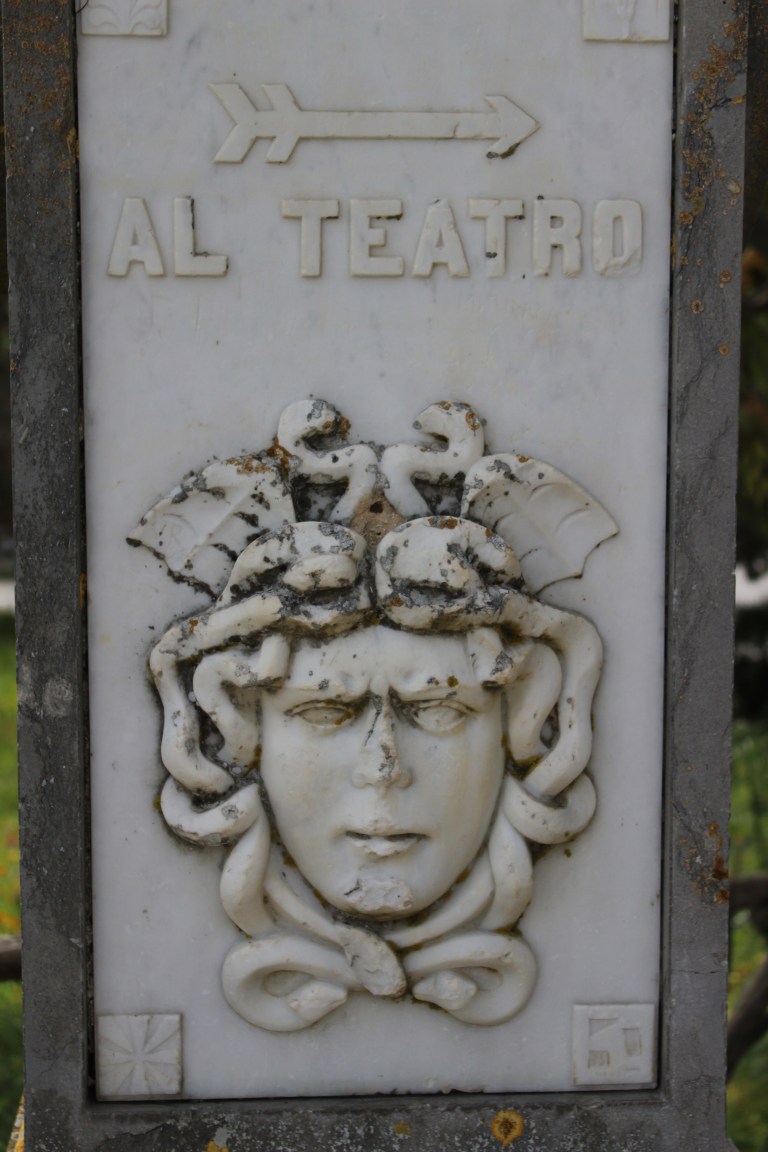
Last fall, the second season of the HBO hit series The White Lotus had me hooked with Portia’s fashion choices, Harper’s toxic spiral, and everything Tanya did and said.
Oh, but the setting. *Chef kisses*
The San Domenico Palace, that absolutely stunning Four Seasons where all the shenanigans took place, and the gorgeous city of Taormina is the true star. Yet, this isn’t the first time Sicily steals the show.
Call Me by Another Name: Palermo
The first time I saw Italy was in the film Cinema Paradiso directed by Giuseppe Tornatore. Lush panoramas, a bustling piazza anchored by a church and its belltower, women making tomato paste on wooden boards—it all captured my imagination. I immediately made plans to one day visit the enchanting village of Giancaldo, only to discover that there was no such town by that name.
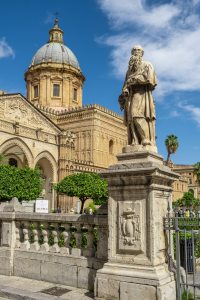
Pulling back the curtain on movie magic, I discovered the real place I dreamed of visiting was the capital of the island of Sicily, Palermo. What’s more, I kept recognizing it in other Italian movies, from Roberto Benigni’s Johnny Stecchino to the classic film The Leopard. Some of the city’s most famous landmarks, such as the Norman Palace, the Palatine Chapel, and the Teatro Massimo, made cameos in movies since the 1960s.
Founded by the Phoenicians in the eighth century BCE, Palermo remained a Phoenician city until the First Punic War, when Sicily fell under Roman rule. Year later, Palermo was ruled by the Byzantine Empire, then the Normans, then the Spanish, before becoming a part of Italy. As the most conquered city in the world, Palermo has a wealth of beautiful architecture, from ancient ruins to Baroque palaces. Yet, Sicily’s capital was only the beginning of my cinematic tour of this camera-friendly island.

A Backdrop That Can’t Be Refused: Messina
Francis Ford Coppola’s iconic Godfather trilogy shined a massive spotlight on new destinations for me to dream of. While Corleone, the birthplace of the family’s patriarch, is a real town in the province of Palermo, the director opted to film in Messina. Movie magic strikes again!
Messina is a living testament to the many civilizations that have traversed it: from Roman, Byzantine and Arab invasions to the days of glory during Aragon’s reign when Messina became capital of Kingdom of the Two Sicilies. Yet, through Coppola’s films, viewers were able to see a rugged and quaint view of this region, beginning with the Sicilian village of Forza d’Agrò—the stand-in for Corleone’s hometown. Entire scenes were shot overlooking the coastline and Arab-Norman castle of Capo Sant’Alessio, as well as in and around the central cathedral, which is one of the most beautiful in this region.
Twenty minutes from Forza d’Agrò is one of the most famous film locations in the village of Savoca, Bar Vitelli. This is where Michael Corleone asks Apollonia’s hand in marriage. However, this is no ordinary bar. It’s housed in the 18th century Palazzo Trimarchi, located in the Piazza Fossia, the town’s main square. The bar features an outdoor vine-covered terrace from where you can enjoy spectacular views of the areas surrounding Savoca.
Sign, Sealed, Delivered: Lipari
After watching the film Il Postino, I too had created my own trilogy of Sicilian destinations by adding the Aeolian Islands to the list. The classic 1994 Italian film directed by Michael Radford tells the fictional story in which Chilean poet Pablo Neruda forms a friendship with a local postman. Eventually writing his own poetry, the postman captures the heart of the love of his life. This Oscar-nominated movie was filmed along the northeast coast of Sicily, making the turquoise water and volcanic peaks almost as important as the main character.
Being On Set
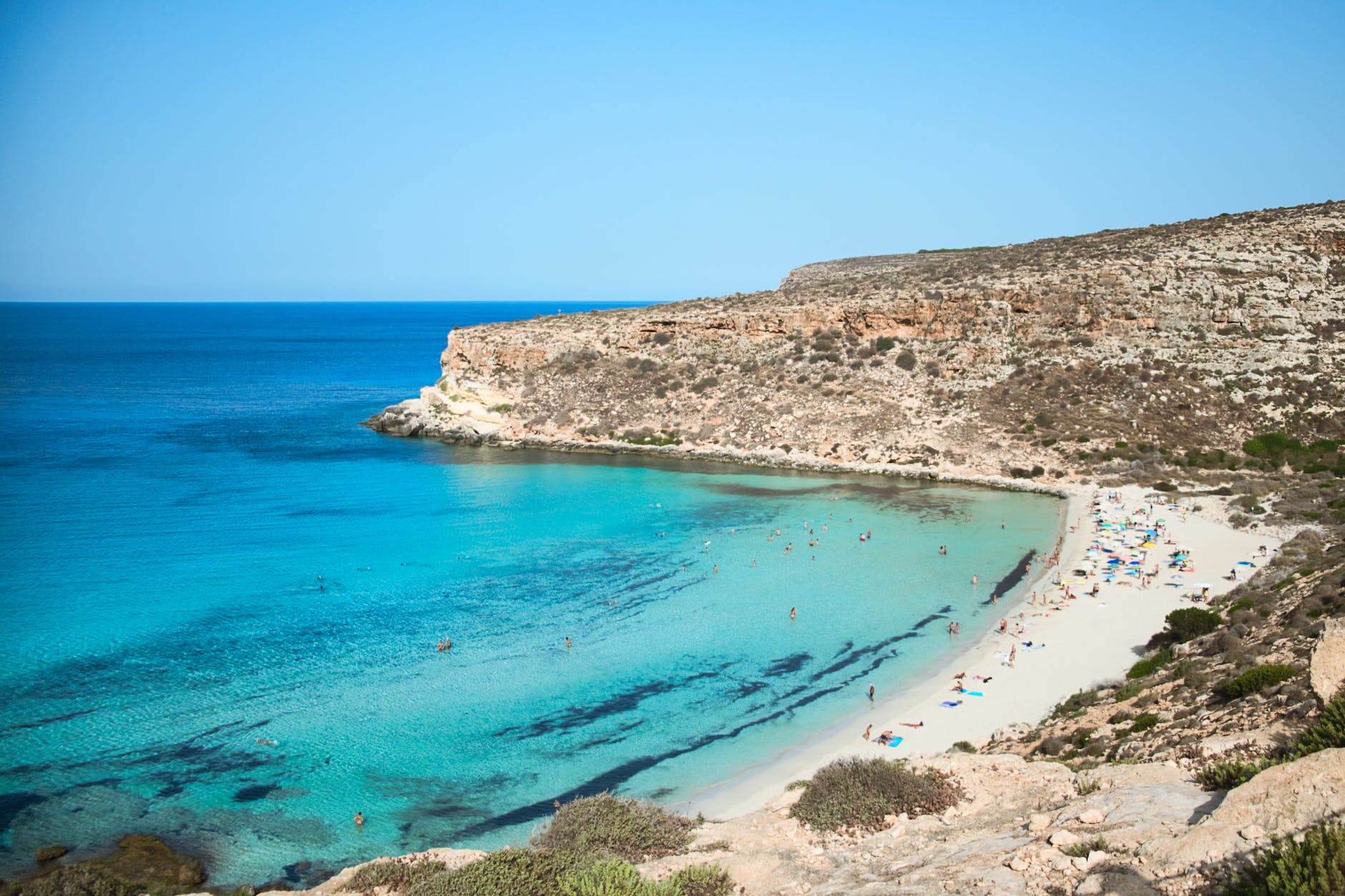
When I did get the opportunity to travel to Sicily, it was like walking on to a movie set. The beaches, Mt. Etna, and the charming villages were more than beautiful backdrops, they were very much real. As were the delicacies of Messina that were thankfully not props (read: wine and cannoli). I had the opportunity to walk in the footsteps of Malèna while in Trapani, and even had my own Monica Vitti moment in Taormina, while overlooking the Ionian Sea. I set a postcard from Lipari in honor of Il Postino and discovered the hidden streets of Palermo with the enthusiasm of a child.
Whether it’s a romantic comedy set in Siracusa or a tense drama showcasing the stunning shores of Catania, Sicily’s beauty is a scene stealer.

P.S. A Quick History of Italian Film
Italy has long been a popular location for filmmakers, and thanks to its stunning landscapes, rich history, and vibrant culture, cinephiles will continue to see Sicily and beyond—from the rolling hills of Tuscany to the canals of Venice—on the big screen. The country’s extraordinary architecture, art, and ancient ruins offer a sense of history and grandeur that adds to the cinematic experience, in addition to endless inspiration for filmmakers.
The first Italian film, La presa di Roma, was released in 1905. Since then, Italian cinema has produced a diverse array of award-winning films.
In the 1940s and 1950s, Italian neorealism emerged as a prominent movement in Italian cinema. Neorealist films focused on depicting the realities of everyday life in post-World War II Italy and often featured non-professional actors and location shooting. Some notable neorealist films include Bicycle Thieves (1948) by Vittorio De Sica and La Strada (1954) by Federico Fellini.
In the 1960s, Italian cinema produced an incredible range of films. Federico Fellini completed four features, including La Dolce Vita, 8 ½, Juliet of the Spirits, and Satyricon. This era also saw the rise of the spaghetti western, like Sergio Leone’s The Good, the Bad and the Ugly.
In the 1970s, Italian horror films, or giallo films, gained popularity, thanks to directors like Dario Argento and Lucio Fulci. Well-known giallo films were Suspiria (1977) and Fulci’s The Beyond (1981).
The 1980s and 1990s brought international acclaim to the art of Italian cinema with Cinema Paradiso (1988) and Roberto Benigni’s La Vita è Bella (1997).
Italian cinema has continued to produce influential and acclaimed films in recent years, with directors like Paolo Sorrentino, Matteo Garrone, and Luca Guadagnino gaining international recognition for their work.
 a little cuban goes a long way